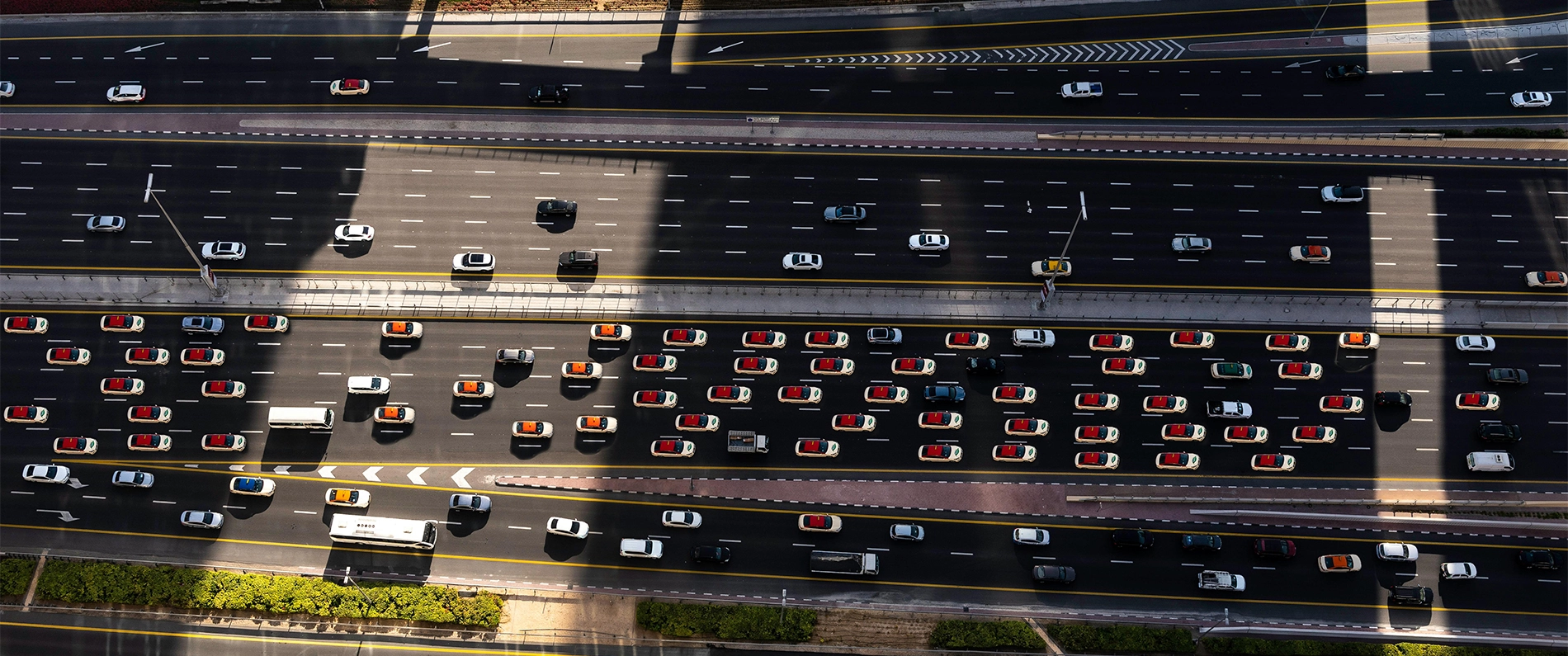
Dubai’s Roads and Transport Authority has completed a 13-kilometre internal road network connecting 18 residential communities across the emirate, in a move that underscores the city’s continued push to ease congestion and improve neighbourhood mobility.
The works, spanning areas from Al Barsha and Al Quoz to Mirdif, Satwa, and Umm Suqeim, form part of a broader effort to tighten Dubai’s urban grid in a city shaped by rapid expansion and dispersed residential development.
The project includes new road links, upgraded traffic flow systems, pedestrian pavements, street lighting, and additional roadside parking. Authorities expect the improvements to reduce travel times within affected districts by up to 40%, achieved by easing access points and removing internal bottlenecks that often divert traffic onto major arterial roads.
The newly completed network is designed to improve vehicle entry and exit across 18 densely populated districts, many of which have developed organically over decades and now require retrofitting to accommodate higher traffic volumes.
Areas covered include Al Khawaneej 1, Al Barsha 1 and South 1, Nad Shamma, Mirdif, Al Rashidiya, Al Twar 1, Al Quoz 1 and 3, Al Satwa, and Umm Ramool, among others.
The Roads and Transport Authority has increasingly relied on incremental upgrades as population growth places sustained pressure on Dubai’s road infrastructure. The 13 km expansion forms part of a wider, multi-year programme aimed at improving traffic efficiency and urban liveability.
RTA said the upgrades will also enhance pedestrian safety and accessibility through improved sidewalks, lighting systems, and structured parking provisions, reflecting a gradual shift away from historically car-centric urban planning.
At a broader level, the initiative reflects Dubai’s evolving transport approach, combining large-scale infrastructure projects with targeted local interventions designed to unlock immediate efficiency gains across residential zones.