After several years of strong rental growth, Dubai’s rental market is beginning to show signs of greater flexibility.
Tenants are exploring more options, negotiating on price and payment terms, and in some cases choosing to move rather than renew. At the same time, demand remains active, suggesting the market is adjusting rather than slowing significantly.
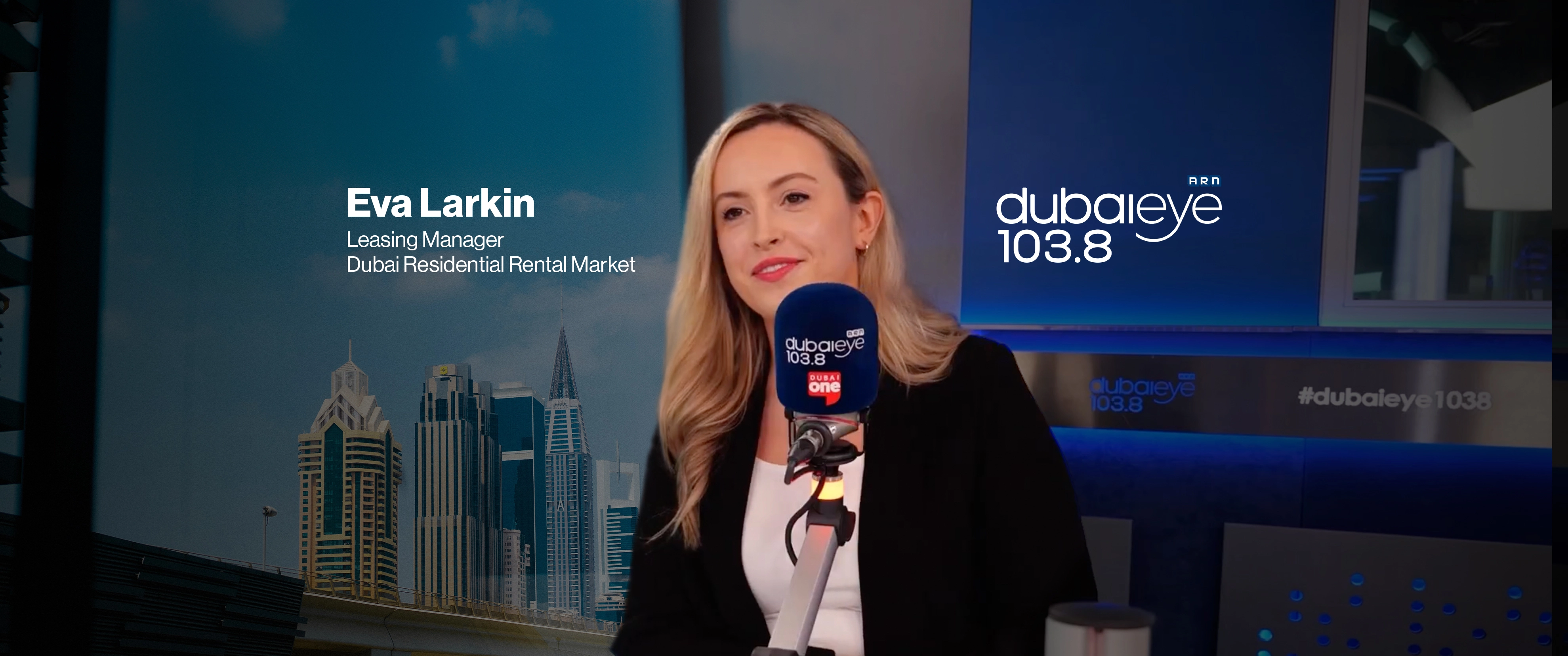
Speaking on Dubai Eye’s Business Breakfast, Eva Larkin, Leasing Manager at Espace Real Estate, shared what Espace is seeing on the ground as Dubai moves out of the summer period.
More Tenants Are Choosing to Move
One of the clearest shifts is the balance between new rental contracts and renewals.
Across Dubai, new contracts have increased by 44%, while renewals are down 4%. The pattern is even more pronounced in some established communities:
Palm Jumeirah: new contracts up 25%, renewals down 8%
The Springs: new contracts up 7%, renewals down 15%
Rather than automatically renewing, more tenants are returning to the market to see what else is available.
For some, that means securing a lower rent. For others, it is an opportunity to move into a newer, larger or better-upgraded property for a similar budget.
Negotiation Is Back on the Table
Tenants are also becoming more confident in making offers.
In established villa communities including The Meadows, The Springs and Arabian Ranches, Espace is seeing greater flexibility around payment terms. Areas that traditionally attracted one or two-cheque agreements are now receiving offers structured across three or four cheques.
Tenants are also commonly opening negotiations at around 10% below the advertised rental price, although whether those offers are accepted remains highly dependent on the individual property, landlord and level of demand.
This means negotiation is no longer simply about the headline rent. Number of cheques, contract length, property condition and upgrades are all becoming part of the conversation.
Quality Homes Are Winning
The shift is also making property quality increasingly important.
During periods of limited supply, tenants may have been prepared to compromise on condition to secure a home in their preferred community. With more choice available, that behaviour is changing.
Tenants are increasingly comparing communities and considering upgraded or better-quality homes rather than paying a premium simply to remain in one particular location.
For landlords, pricing and presentation therefore matter. Those responding to current market conditions and setting realistic asking prices are more likely to secure tenants, while properties that are overpriced or in poorer condition may face greater competition.
Demand Remains Strong
Greater negotiating power does not mean rental demand has disappeared.
Espace recorded a significant increase in tenant activity towards the end of August. Comparing the beginning of the month with the latter weeks, tenant enquiries increased by 51%, while listing views rose 10% and impressions increased 7%.
At the same time, available listings declined by 2%.
This creates an interesting dynamic: tenants currently have more confidence to negotiate, but if demand continues to absorb available stock, that window could begin to narrow.
A Good Deal Today Could Look Different at Renewal
For tenants negotiating a lower rent, it is also worth looking beyond the first year.
Dubai’s rental index plays an important role in determining potential increases at renewal. If a tenant secures a property at the lower end of the rental range for that building or area, there may be greater scope for the rent to increase in subsequent years.
A lower price today can still represent good value, but tenants should understand how that initial rent could affect future renewals.
What Happens Next?
The rental market typically becomes more active as Dubai moves out of summer, and Espace’s latest figures suggest that momentum is already building.
Tenant enquiries increased by 51% towards the end of August, and if that demand continues to convert into new contracts, the level of available stock could begin to tighten in some communities.
That could change the balance again. Tenants currently have more room to compare properties and negotiate, but the strongest homes particularly those that are well-priced, upgraded and well located continue to attract demand.
For landlords, realistic pricing will be key. For tenants, there may be opportunities to secure better value, but those opportunities will vary considerably from one property and community to another.
Dubai’s rental market is becoming more competitive on both sides, making current, community-level data increasingly important when deciding what represents fair value.